Introduction
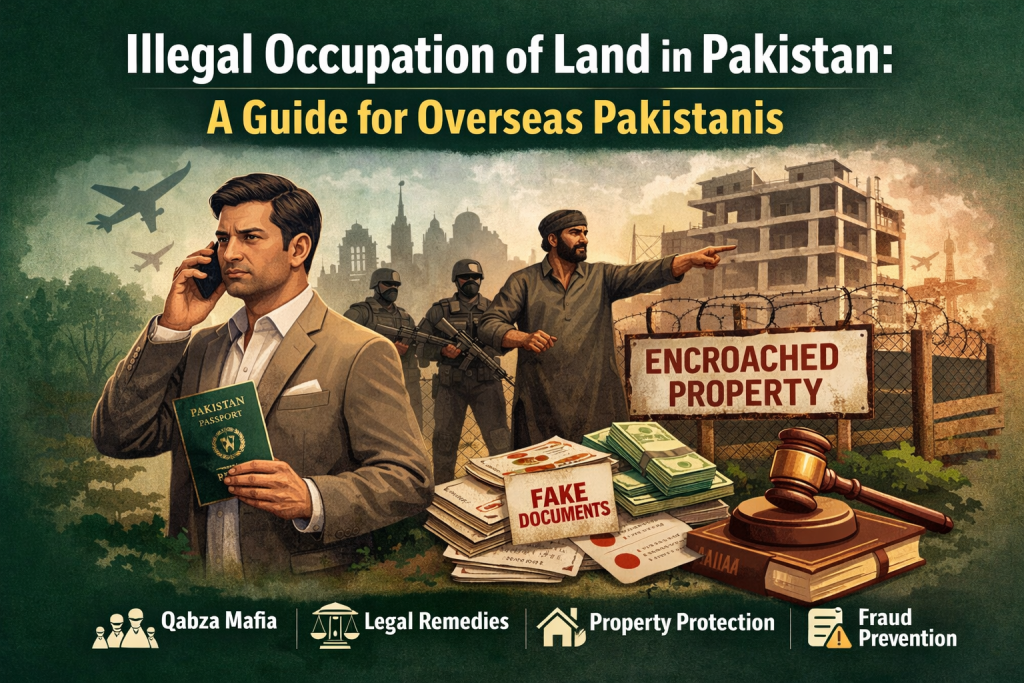
Illegal occupation of land in Pakistan is a growing legal and financial challenge, particularly for Overseas Pakistanis. Properties earned abroad often become vulnerable due to absence, delayed oversight, and misplaced trust in relatives or caretakers. Encroachment, fraudulent possession, forged documents, and unauthorized transfers are increasingly common.
Table of Contents
Legally, illegal occupation of land in Pakistan refers to unlawful possession without the consent of the lawful owner, including encroachment, forged documents, misuse of powers of attorney, and fraudulent mutations in revenue records. Such acts carry civil and criminal liability under Pakistani law.
Overseas Pakistanis face unique disadvantages, as distance limits monitoring and quick action. Fraudsters—including qabza mafias or even relatives—may rent, sell, or mortgage properties without the owner’s knowledge.
Key Preventive Step: Regularly verify property ownership, mutations, and revenue records through lawful means to reduce the risk of fraudulent claims.
Related guidance: Verify Property Ownership in Pakistan
Pakistani law provides clear civil, criminal, and administrative remedies, but success depends on timely action, proper documentation, and strategic legal intervention. Courts have consistently recognized the vulnerability of absentee owners and granted relief where fraud, forgery, or misuse of authority is established.
This guide covers:
- Legal meaning and forms of illegal occupation
- Role of relatives and misuse of trust
- Dangers of General Power of Attorney
- Civil, criminal, and administrative remedies
- Preventive strategies used in developed jurisdictions
- Foolproof legal and financial safeguards
The objective is not only recovery of property but also long-term protection, ensuring overseas investments remain secure, lawful, and under the owner’s control.
Understanding Illegal Occupation of Land in Pakistan
Legal Meaning of Illegal Occupation
Illegal occupation occurs when a person enters or remains in possession of immovable property without lawful authority, consent, or valid title. Occupation may begin unlawfully or start legally but later become illegal through abuse of authority, expiration of permission, or breach of trust.
Pakistani law often treats illegal occupation as a criminal offense when fraud, forgery, trespass, or conspiracy is involved.
Official Source: Pakistan Penal Code – Government of Pakistan
Common Forms of Illegal Occupation
- Forceful or Organized Encroachment – Physical takeover of land by qabza mafias using threats, intimidation, or collusion.
- Fraudulent Possession Through Forged Documents – Fake sale deeds, mutations, or manipulated revenue records create false ownership appearances.
- Misuse of General Power of Attorney (GPA) – Enables unauthorized sale, lease, mortgage, or control of property.
- Abuse of Trust by Relatives or Caretakers – Close relatives exploit absence, turning temporary caretaking into hostile possession.
- Unauthorized Tenancy or Conversion – Tenants or caretakers refuse to vacate, alter possession, or claim ownership.
When Lawful Possession Becomes Illegal
- Expired leases not honored
- Revoked powers of attorney ignored
- Temporary permissions converted into ownership claims
Continued possession after authority ends constitutes illegal occupation, actionable under civil and criminal law.
Civil vs Criminal Nature
- Civil: Suit for possession, permanent/temporary injunctions, cancellation of fraudulent documents
- Criminal: Criminal trespass, cheating, forgery, criminal conspiracy
Why Overseas Pakistanis Are More Vulnerable
- Physical Absence and Limited Monitoring – Unable to detect early warning signs like illegal construction or tampering with records.
- Over-Reliance on Relatives or Informal Caretakers – Trust may be abused via false ownership narratives or collusion.
- Misuse of General Power of Attorney (GPA) – Grants wide authority that can be exploited for illegal transfers or financial gain.
- Delay in Legal Response and Evidence Loss – Delayed discovery allows occupants to manipulate records or produce fabricated witnesses.
- Limited Awareness of Legal Remedies – Many overseas owners remain unaware of civil, criminal, or administrative recourse.
- Absence of Professional Legal Oversight – Lack of continuous supervision allows fraudulent acts to go undetected.
Legal Insight: Courts favor absentee owners who provide timely action, documentation, and professional representation.
Fraud by Trusted Relatives and Abuse of Family Trust
Family-based fraud is particularly complex, often concealed behind emotional bonds and cultural expectations.
Common Tactics
- Misuse of GPA – Sell, lease, or mortgage property without consent
- Unauthorized Sale or Transfer – Forged sale deeds, manipulated mutations
- Illegal Possession and Unauthorized Use – Construction, leasing for personal gain
- Financial Exploitation – Diverting rental income or sale proceeds
- Forgery of Identity and Signatures – Fake documents, witnesses, or CNIC misuse
Why Family Fraud is Harder to Detect
- Emotional trust delays suspicion
- Easy access to documents and property
- Hidden disputes until irreversible damage occurs
Preventive Legal Safeguards
- Avoid broad GPAs
- Use restricted SPAs
- Financial control via designated bank accounts
- Professional legal oversight
- Periodic verification of land records
Guidance: Verify Property Ownership in Pakistan
Role of Qabza Mafia and Institutional Collusion
Qabza mafias systematically target absentee owners, exploiting administrative weaknesses.
Tactics
- Forged documentation
- Manipulation of land revenue records
- Collusion with relatives or SPA holders
- Unauthorized construction
- Intimidation and litigation to financially exhaust owners
Preventive Strategies
- Continuous legal monitoring
- Restricted authority only (avoid GPAs, use purpose-specific SPAs)
- Financial safeguards
- Immediate legal action
Key Insight: Mafias succeed through delay, silence, and unchecked authority.
Legal Remedies Available in Pakistan
Civil Remedies
- Suit for Possession – Recover land and evict illegal occupants
- Temporary/Permanent Injunctions – Stop further illegal acts
- Claim for Damages – Loss of income, property depreciation
Criminal Remedies
- Criminal Trespass – PPC Sections 441–447
- Forgery and Fraud – PPC Sections 463–471
Administrative Remedies
- Revenue Authority Complaints – Deputy Commissioner, Tehsildar
- Land Record Verification & Rectification – Fard-e-Malkiat, mutation history
- Ombudsman & Special Forums – Fast-track relief in administrative negligence
Strategy: Use civil recovery, criminal deterrence, and administrative correction simultaneously.
Evidence & Documentation Strategy
- Ownership Documents – Sale deeds, Fard-e-Malkiat, registered mutations
- POA Records – SPAs, proof of scope, expiry, revocation
- Evidence of Illegal Occupation – Photos, videos, witness statements, correspondence
- Financial Documentation – Bank statements showing proper deposit of proceeds
- Land Record Monitoring – Periodic verification and mutation audit
- Legal Notices & Case Records – Chronological documentation strengthens claims
Insight: Strong documentation converts suspicion into proof and proof into recovery.
Fool-Proof Property Protection Framework
- Avoid GPAs
- Use restricted SPAs
- Financial safeguards through designated accounts
- Professional legal management
- Continuous land record monitoring
- Immediate action on red flags
- Comprehensive documentation
Core Insight: Property protection is based on control, documentation, and professional oversight—not trust.
Step-by-Step Procedure to Recover Illegally Occupied Land
- Verify ownership
- Document illegal occupation
- Issue legal notice
- File civil suit
- Lodge criminal FIR if applicable
- Appoint reliable legal representation
- Monitor progress and enforce court orders
- Maintain post-recovery oversight
Key Recommendation: Timely, systematic legal action minimizes financial and legal risk.
Relevant Case Law & Judicial Protection
- Misuse of GPA – Courts invalidate unauthorized acts
- Eviction of Illegal Occupants – Courts order removal regardless of occupation duration
- Forgery and Fraud – Forged documents nullified
- Collusion with Officials – Illegal transfers invalidated
- Recognition of Absentee Ownership – Courts support rightful owners
- Preventive Measures Recognized – Restricted SPAs and professional oversight reduce fraud risk
Takeaway: Strong evidence, proper documentation, and proactive legal counsel are decisive.
Preventive Checklist & FAQs
Checklist
- Avoid GPAs
- Use restricted SPAs
- Maintain financial control
- Engage professional legal experts
- Regularly monitor property and records
- Act immediately on red flags
- Document everything
- Adopt professional management standards
FAQs
- What is illegal occupation? – Possession without consent or authority
- Why are overseas Pakistanis vulnerable? – Absence, trust, limited awareness, delayed action
- Can relatives misuse a GPA? – Yes, use restricted SPAs
- Financial protection measures? – Designated accounts, expert oversight, transparent records
- Available legal remedies? – Civil, criminal, administrative
- How to recover property? – Verify, document, issue notice, file cases, monitor enforcement
- Engage legal experts abroad? – Absolutely
- Can courts protect absentee owners? – Yes, eviction and nullification of forged transactions
- Preventive framework? – SPAs, financial control, monitoring, expert oversight, prompt action
- Family misuse? – Revoke SPA, consult experts, issue notices, secure property and funds
Conclusion & Final Insights
Illegal occupation is a serious threat to Overseas Pakistanis. Physical absence, broad GPAs, and lack of oversight create vulnerability. Fraud can involve relatives, mafias, or officials.
Key Takeaways:
- Avoid GPAs; use restricted SPAs
- Maintain financial control
- Engage professional lawyers
- Monitor property records
- Act quickly on red flags
- Document everything
Final Insight: Structured management, financial safeguards, and proactive legal strategies transform vulnerable properties into secure assets.
Contact 📞
Pakistan Legal Services
📞 Call/WhatsApp: +92-333-4241182
🌐 www.pakistanlegalservices.com
Specialized support to protect property, manage SPAs, recover illegally occupied land, and ensure compliance with Pakistani law.
Disclaimer ⚖️
For informational purposes only. Not legal advice. Consult a qualified lawyer in Pakistan for personalized guidance.
Comments 💬
Share your experiences, questions, or tips on property disputes or illegal occupation. You can write in any language.