1. Introduction
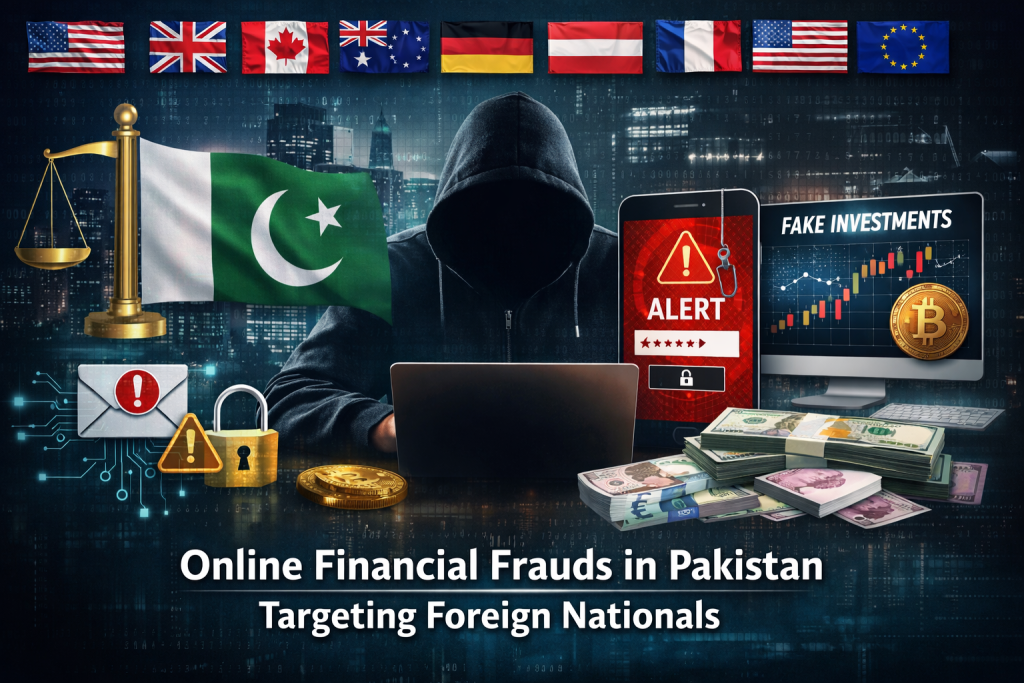
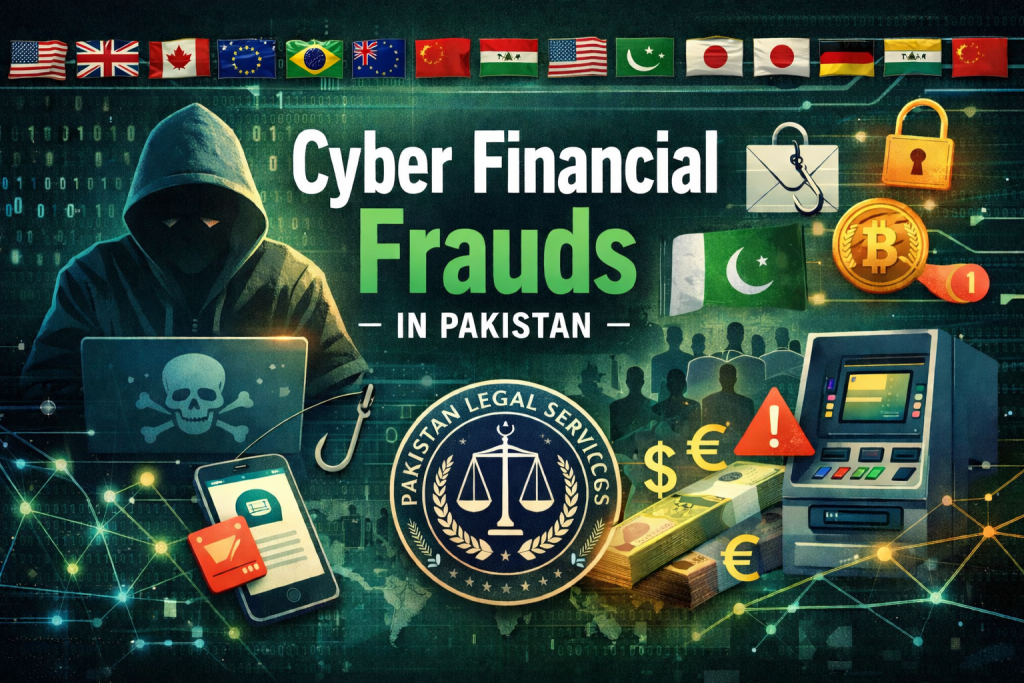
Cyber financial frauds in Pakistan have emerged as one of the most serious legal and economic threats in the digital era. With the rapid expansion of online banking, mobile wallets, e-commerce platforms, freelance payment systems, and digital investment tools, criminals increasingly exploit technology to commit financial crimes without physical presence.
Table of Contents
These frauds cause not only direct monetary losses but also long-term damage to public trust in digital financial systems. Victims often face serious hurdles in recovery due to delayed reporting, jurisdictional complexities, lack of awareness, and rapid disappearance of electronic evidence. As Pakistan moves steadily toward a cashless and digitally connected economy, understanding cyber financial frauds, their legal implications, and available remedies has become essential for individuals and businesses alike.
This pillar article provides a comprehensive legal and practical overview of cyber financial frauds in Pakistan, covering definitions, types, causes, trends, governing laws, reporting mechanisms, remedies, prevention strategies, challenges, and future outlook.
2. What Are Cyber Financial Frauds in Pakistan?
Cyber financial frauds in Pakistan refer to illegal acts committed through electronic systems, digital networks, or online platforms with the intent to unlawfully obtain money, financial information, or economic benefit.
Key Legal Characteristics
- Crimes are technology-driven and remotely executed
- Offenders may operate anonymously or from foreign jurisdictions
- Evidence is primarily electronic (digital trails, logs, messages)
Unlike traditional fraud, cyber financial frauds rely on digital deception and system exploitation. Under Pakistani law, most such offences fall within the scope of the Prevention of Electronic Crimes Act (PECA), 2016, making them criminally punishable.
3. Common Types of Cyber Financial Frauds in Pakistan
3.1 Phishing and Smishing Frauds
Phishing involves fraudulent emails, while smishing uses SMS or WhatsApp messages to trick victims into sharing bank login credentials, OTPs, debit or credit card details. Fraudsters often impersonate banks, courier services, or government departments.
3.2 Online Banking and Internet Account Frauds
These frauds occur when criminals gain unauthorized access to internet banking accounts, create fake banking websites or apps, and transfer funds without consent. Victims often discover the fraud only after funds are withdrawn.
3.3 Mobile Wallet Frauds (JazzCash, Easypaisa, etc.)
Mobile wallet users are targeted through fake customer support calls, SIM-swap frauds, and OTP interception. Weak verification practices and lack of awareness increase vulnerability.
3.4 ATM, Debit Card, and POS Frauds
Includes card skimming, cloning of debit or credit cards, and unauthorized POS transactions. Even with EMV chips, negligence can result in losses.
3.5 Social Engineering and Impersonation Scams
Fraudsters psychologically manipulate victims by posing as bank officials, law-enforcement officers, business partners, or relatives, creating urgency or fear.
3.6 Cryptocurrency and Online Investment Scams
Victims are lured into fake crypto trading platforms, Ponzi schemes, and unrealistic profit guarantees, often through social media or influencers.
3.7 SIM Swap and Account Takeover Frauds
Criminals fraudulently obtain control of a victim’s SIM card, enabling them to reset banking passwords, receive OTPs, and drain accounts. This is one of the fastest-growing cyber financial frauds in Pakistan.
Professional Recommendation: Early reporting is critical. Delay often results in loss of digital evidence and reduced recovery chances.
4. How Cyber Financial Frauds Occur in Pakistan
Cyber financial frauds usually involve a combination of technical exploitation and human manipulation.
4.1 Technical Methods Used by Criminals
- Malware and spyware via fake apps or links
- Keylogging software capturing credentials
- Fake websites mimicking banks or payment gateways
- Data interception through unsecured Wi-Fi networks
4.2 Human Factors and Social Engineering
Human error remains a primary cause, including:
- Trusting unknown callers
- Clicking suspicious links
- Sharing OTPs or verification codes
- Using weak or repeated passwords
4.3 Insider Negligence and Data Leaks
Poor data protection practices, employee negligence, and leaked customer data allow criminals to target victims more precisely.
4.4 Cross-Border and Anonymous Nature
Fraudsters often use fake identities, VPNs, encrypted platforms, and foreign servers, complicating investigation and recovery. International cooperation is often coordinated through INTERPOL cybercrime operations.
5. Statistics and Trends of Cyber Financial Frauds in Pakistan
Cyber financial frauds have shown a consistent upward trend due to increased digitization.
5.1 Rising Complaints
- Thousands of complaints registered annually with NCCIA
- Financial fraud constitutes a major share of cyber complaints
- Many cases remain unreported
5.2 Most Affected Groups
- Online banking users
- Mobile wallet users
- Freelancers receiving foreign payments
- SMEs and first-time digital users
5.3 Emerging Trends
- AI-generated scam messages
- Deepfake voice impersonation
- Fake investment influencers
- Increase in SIM-swap frauds
6. Legal Framework Governing Cyber Financial Frauds in Pakistan
6.1 Prevention of Electronic Crimes Act (PECA), 2016
Relevant provisions include:
- Section 3: Unauthorized access
- Section 4: Unauthorized copying or transmission
- Section 6: Electronic fraud
- Section 7: Identity theft and impersonation
Penalties: 3–7 years imprisonment, fines, civil liability. Electronic evidence is admissible.
6.2 State Bank of Pakistan (SBP) Regulations
- Cybersecurity guidelines for banks
- Fraud monitoring and reporting
- Consumer protection via SBP Consumer Protection Department
6.3 Pakistan Telecommunication Authority (PTA)
- Official PTA website
- SIM registration and verification
- Monitoring spam and fraud messaging
6.4 Enforcement Agency
The National Cyber Crime Investigation Agency (NCCIA) investigates cyber financial frauds, seizes digital evidence, traces transactions, and coordinates with banks and international agencies.
7. Reporting and Remedies for Victims
7.1 Reporting to NCCIA
File a complaint online via NCCIA portal or at the nearest office, providing all transaction details and digital evidence.
7.2 Reporting to Banks and Wallet Providers
Notify immediately, request account freezing, and coordinate with NCCIA for recovery.
7.3 SBP Consumer Protection
Victims may escalate disputes to SBP Consumer Protection if unresolved.
7.4 Civil Remedies
- Recovery suits
- Damages for institutional negligence
- Injunctions to prevent further loss
8. Prevention: Best Practices
8.1 For Individuals
- Strong passwords and MFA
- Never share OTPs
- Avoid public Wi-Fi
- Regular transaction monitoring
8.2 For Businesses
- Cybersecurity audits
- Employee training
- Secure payment systems
- Incident response protocols
9. Technology Solutions Against Cyber Financial Frauds
- AI-based transaction monitoring
- Biometric and multi-factor authentication
- Encryption and tokenization
- Blockchain-based security mechanisms
10. Case Studies of Cyber Financial Frauds in Pakistan
Case 1: Phishing Scam
Victim entered credentials on a fake bank portal. Partial recovery achieved due to early NCCIA reporting.
Case 2: Mobile Wallet Fraud
OTP shared with fake customer support resulted in immediate fund transfer.
Case 3: Crypto Investment Scam
Fake platform disappeared; cross-border investigation ongoing.
11. Challenges in Tackling Cyber Financial Frauds
- Under-reporting
- Jurisdictional complexities
- Limited public awareness
- Resource constraints in enforcement
- Rapidly evolving fraud techniques
12. Future Outlook
AI-powered frauds, deepfake impersonation, crypto scams, and mobile wallet exploits are expected to rise. Prevention requires legal compliance, technological safeguards, and continuous public awareness.
13. FAQs on Cyber Financial Frauds in Pakistan
What should I do immediately after fraud?
Report to NCCIA and your bank without delay.
Can banks be held liable?
Yes, if negligence is proven under SBP regulations.
14. Conclusion
Cyber financial frauds in Pakistan present serious risks, but legal awareness, timely reporting, and proactive prevention significantly reduce losses. Understanding PECA 2016, SBP and PTA regulations, and NCCIA procedures empowers individuals and businesses to act decisively.
You may also be intrested to read: Online Financial Frauds in Pakistan
Contact
Pakistan Legal Services
📞 Call/WhatsApp: +92-333-4241182
🌐 www.pakistanlegalservices.com
Disclaimer: This article is for informational purposes only. It does not constitute legal advice. For personalized assistance, consult a qualified lawyer in Pakistan.