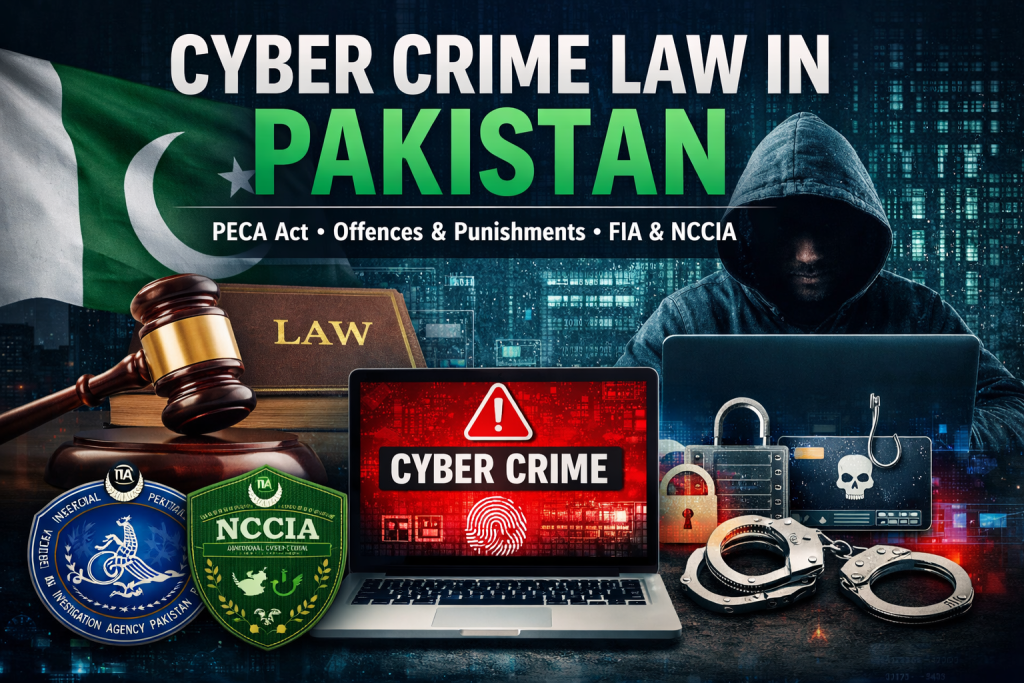
In Pakistan, Cyber Crime Laws in Pakistan are critical for protecting individuals, businesses, and government institutions from unlawful activities in the digital realm. With the rapid growth of technology and internet usage, cybercrime has become increasingly sophisticated, requiring clear legal frameworks to prevent and prosecute offenses. Understanding these laws helps organizations and citizens safeguard digital assets, maintain privacy, and ensure compliance with statutory obligations. This guide explores key aspects of cybercrime laws, statutory provisions, landmark cases, practical examples, and step-by-step measures for legal compliance.
Table of Contents
Summary Insight
The legal framework for Cyber Crime Laws in Pakistan is primarily governed by the Prevention of Electronic Crimes Act (PECA) 2016, supported by the Pakistan Penal Code (PPC) and other sector-specific regulations. These laws cover offenses such as hacking, identity theft, online fraud, defamation, and cyberterrorism. Courts have emphasized the need for adherence to digital regulations while balancing constitutional rights, privacy, and public safety.
Overview of Cyber Crime Laws in Pakistan
Definition and Scope
Cybercrime refers to offenses committed using digital devices, networks, or the internet. In Pakistan, it includes:
- Hacking: Unauthorized access to computer systems.
- Identity Theft: Using another person’s identity for illegal purposes.
- Financial Fraud: Online scams, phishing, and digital payment fraud.
- Cyber Terrorism: Using digital means to incite violence or threaten national security.
- Online Defamation and Harassment: Spreading false information or harassing individuals online.
Legal Basis
The primary legal instrument is PECA 2016, which provides detailed provisions on electronic crimes, penalties, and procedural requirements. Section 3 of PECA defines offenses related to unauthorized access, while Sections 7–13 address identity-related crimes and cyberterrorism. Complementary laws include Sections 419, 420, and 468 of the PPC, governing fraud and forgery in electronic communications.
Constitutional and Islamic Foundations
The enforcement of cybercrime laws aligns with constitutional protections such as Article 14 (dignity of individuals) and Article 19 (freedom of expression), ensuring that prosecution respects privacy and fundamental rights. Islamic principles emphasize honesty, privacy, and accountability; for instance, the Quran states: “Do not spy or backbite one another” (Surah Al-Hujurat, 49:12), underscoring ethical online conduct.
Historical Development of Cyber Crime Laws in Pakistan
Early Digital Legislation
Prior to PECA 2016, Pakistan’s legal framework lacked specific digital crime laws. Offenses were prosecuted under general provisions of the PPC, leading to inconsistent rulings.
Introduction of PECA 2016
The enactment of PECA 2016 marked a milestone in Pakistan’s approach to cybercrime. It codified electronic offenses, penalties, and investigation procedures.
Post-PECA Judicial Evolution
Courts have since interpreted PECA provisions in multiple landmark cases, strengthening enforcement mechanisms. For example, Federal Investigation Agency (FIA) v. Muhammad Ali (2018) highlighted the admissibility of digital evidence in cybercrime cases.
Key Provisions Under PECA 2016
Unauthorized Access (Section 3)
Section 3 penalizes unauthorized access to computer systems, including hacking. Offenses carry imprisonment of up to three years or fines.
Identity Theft and Data Breach (Sections 7–10)
These sections criminalize identity misuse, phishing, and unauthorized dissemination of personal information.
Cyber Terrorism (Section 11)
Cyber terrorism includes acts threatening national security via digital platforms, punishable with imprisonment or capital sentences for severe cases.
Cyber Harassment (Sections 21–22)
PECA addresses online harassment, bullying, and defamation, protecting individuals from mental and emotional harm.
Digital Evidence (Section 25)
Courts recognize electronic records as admissible evidence, following strict chain-of-custody and authenticity requirements.
Complementary Laws: PPC and Other Statutes
- Pakistan Penal Code (PPC): Sections 420, 468, and 469 address fraud, forgery, and cheating in digital contexts.
- Prevention of Electronic Crimes Rules 2018: Establish procedural frameworks for investigation.
- Sector-specific regulations: Telecommunication Authority rules, banking and finance regulations, and e-commerce compliance requirements.
Landmark Case Laws on Cyber Crime in Pakistan
Federal Investigation Agency v. Muhammad Ali (2018)
- Issue: Illegal hacking and unauthorized access to confidential systems.
- Outcome: Court emphasized adherence to PECA procedures and validated digital evidence.
Imran Ahmed v. State (2019)
- Issue: Online harassment and cyber defamation.
- Outcome: Court awarded damages and enforced PECA provisions protecting personal dignity.
Emerging Trends
Courts are increasingly focusing on cross-border cybercrime, data privacy, and the ethical use of technology, integrating both statutory law and Sharia principles.
Practical Examples and Scenarios
- Online Banking Fraud: A user’s credentials are hacked; bank and FIA jointly investigate under PECA and PPC.
- Social Media Defamation: An individual posts defamatory content; the victim files a complaint under PECA Section 21.
- Cyberterrorism Threat: Digital platforms are used to plan attacks; authorities employ Section 11 of PECA to prosecute.
Step-by-Step Compliance for Individuals and Businesses
Step 1: Digital Risk Assessment
- Identify sensitive data and potential vulnerabilities.
- Conduct IT audits regularly.
Step 2: Data Protection Measures
- Use encryption and secure passwords.
- Implement firewalls and antivirus software.
Step 3: Legal Documentation
- Draft clear terms of service and privacy policies for websites.
- Obtain consent for data collection and usage.
Step 4: Reporting and Redress
- File complaints with the FIA Cybercrime Wing.
- Follow PECA guidelines for digital evidence submission.
Step 5: Employee Training
- Conduct awareness sessions on phishing, social engineering, and secure data handling.
Step 6: Compliance Audits
- Review IT policies, data handling procedures, and legal compliance regularly.
Step 7: Legal Representation
- Engage cyber law experts for advisory and litigation purposes.
Framework / Checklist for Cyber Crime Compliance
| Area | Requirement | Reference |
|---|---|---|
| Hacking Prevention | Firewalls, monitoring, access control | PECA Sec 3 |
| Data Protection | Encryption, secure storage, privacy policies | PECA Sec 7–10 |
| Online Harassment | Reporting mechanisms, digital monitoring | PECA Sec 21–22 |
| Employee Awareness | Training programs, internal policies | Best practices |
| Incident Reporting | FIA complaint submission, evidence handling | PECA Sec 25 |
Critical Analysis
While PECA 2016 provides a robust framework, challenges remain:
- Limited Awareness: Many individuals and small businesses are unaware of cybercrime risks.
- Evidence Collection: Maintaining authenticity and admissibility of digital evidence is complex.
- Cross-Border Jurisdiction: Cybercrime often originates outside Pakistan, complicating enforcement.
Courts attempt to balance civil liberties with strict enforcement. Islamic principles emphasizing honesty, privacy, and accountability provide moral guidance complementing statutory law.
Next Step Suggestion
- Conduct internal IT and legal audits.
- Train employees on cyber hygiene and PECA compliance.
- Establish clear digital policies and reporting mechanisms.
- Engage experienced cyber law professionals for advisory and representation.
Expert Critique Section
- Strengths: PECA provides detailed provisions, procedural clarity, and penalties for deterrence.
- Weaknesses: Lack of awareness, slow prosecution, and technical skill gaps in law enforcement.
- Recommendations: Increase public awareness campaigns, strengthen digital forensics capabilities, and establish specialized cybercrime courts.
Frequently Asked Questions (FAQs)
1. What are Cyber Crime Laws in Pakistan?
Cyber Crime Laws in Pakistan govern offenses committed via digital platforms, including hacking, identity theft, online fraud, cyberterrorism, and harassment.
2. Which law is the main reference for cybercrime?
The Prevention of Electronic Crimes Act (PECA) 2016 is the primary law, supported by PPC and sector-specific regulations.
3. How can businesses comply with cybercrime laws?
Businesses should implement IT security measures, data protection policies, employee training, and regular audits. Reporting mechanisms under PECA should be followed.
4. Can online defamation be prosecuted in Pakistan?
Yes, Sections 21–22 of PECA cover online harassment and defamation. Courts have awarded damages and enforced compliance.
5. What role does Islamic law play in cybercrime?
Islamic teachings emphasize honesty, privacy, and accountability. Courts consider these principles to guide ethical conduct alongside statutory laws.
Conclusion
Understanding Cyber Crime Laws in Pakistan is essential for individuals, businesses, and government bodies. PECA 2016, supplemented by PPC provisions and Islamic ethical principles, provides a comprehensive framework for preventing and prosecuting digital offenses. Compliance, risk management, and awareness are critical to safeguarding data, privacy, and digital integrity. As technology evolves, adherence to legal obligations ensures security, ethical conduct, and protection from legal liabilities.
You may also be intrested to read: Power of Attorney in Pakistan: 7 Essentials You Need to Know
📞 Contact
Pakistan Legal Services
WhatsApp: +92-333-4241182
Website: www.pakistanlegalservices.com
💬 Comments
Have questions about Cyber Crime Laws in Pakistan? Share them in the comments — we’d love to provide legal insights and guidance.
⚠️ Disclaimer
This article is for informational purposes only and does not constitute legal advice. For personalized assistance, consult a qualified lawyer in Pakistan.