Introduction
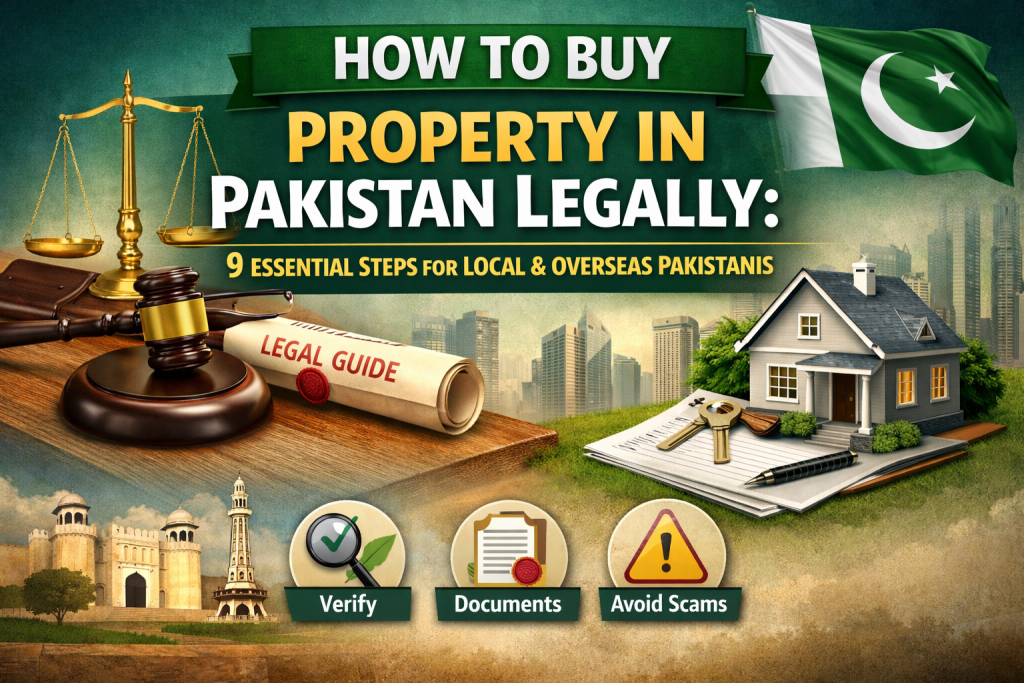
How to buy property in Pakistan is one of the most frequently asked questions by investors, local residents, overseas Pakistanis, and foreign nationals. Property investment can be highly rewarding, but it carries significant legal and financial risks if proper due diligence is ignored.
Table of Contents
Many buyers, particularly those living abroad, face losses due to:
- Illegal housing societies and unapproved developments
- Fake developers or forged documents
- Disputed land ownership
- Misleading advertisements and marketing campaigns
The absence of physical presence, reliance on agents or relatives, and limited access to official records further increase these risks. This guide is designed to help buyers understand their legal responsibilities, avoid common traps, and make safe, informed property decisions under Pakistani law.
Legal Reality of Property Buying in Pakistan
Property transactions in Pakistan are not fully centralized, and the system is highly fragmented:
- Records are spread across revenue departments, development authorities, and private developers
- Courts generally place primary responsibility on buyers to verify legal ownership
- Ignorance of the law or blind trust in sellers, agents, or marketing materials offers no legal protection
For overseas Pakistanis and foreign nationals, these realities make proper verification mandatory, not optional. The law often assumes that a buyer has the means to confirm ownership, approvals, and development status.
Caveat Emptor (مشتری ہوشیار باش) – Buyer Beware
Caveat Emptor, meaning “let the buyer beware,” is a fundamental principle in Pakistani property law. It places the primary responsibility on buyers to verify a property before purchase.
Courts generally expect buyers to:
- Check legal approvals of the housing society
- Verify ownership and land documents
- Confirm the property is free from disputes, encumbrances, or restrictions
Simply trusting a seller, agent, or advertisement is not enough.
If you do not check, you take the risk.
Caveat Emptor underpins all property transactions in Pakistan, emphasizing proactive verification over reactive legal remedies.
Key Takeaways
- Property investment in Pakistan can be profitable but legally complex.
- Buyers—especially overseas Pakistanis—face higher risks due to distance, reliance on agents, and lack of direct oversight.
- The Caveat Emptor principle makes legal verification mandatory, not optional.
What Is Due Diligence in Property Buying
Due diligence is the practical application of the Caveat Emptor principle. It involves conducting legal, technical, and factual verification before making any payment. Proper due diligence protects buyers from fraud, disputes, and financial losses.
Legal Verification
- Confirm that the housing society is approved by the relevant authority (CDA, LDA, RDA, SBCA)
- Verify ownership and title through official records
- Check for disputes, mortgages, or court cases
Technical Verification
- Ensure the layout plan is approved and matches the plot number
- Confirm development progress aligns with what was advertised
Practical Verification
- Inspect the site personally or via a trusted professional
- Compare ground reality with marketing claims
For overseas Pakistanis and foreign nationals, due diligence is not optional—it is essential protection.
Who Can Buy Property in Pakistan?
Property in Pakistan can be purchased by:
Pakistani Citizens (Resident)
- Full rights to buy plots, apartments, or houses
- Must comply with local zoning and housing laws
Overseas Pakistanis
- Can buy property in approved societies
- Must follow legal requirements, including NOCs and proper documentation
Foreign Nationals
- Allowed to buy property only in approved projects
- Require special permission from the Ministry of Interior and relevant local authorities
Important: All buyers, whether local or foreign, are bound by the Caveat Emptor principle and must perform due diligence before payment.
Why Overseas Pakistanis Face Higher Property Risks
Overseas Pakistanis are frequently targeted by fraudsters due to:
- Distance and inability to visit the property personally
- Reliance on agents, relatives, or online documents
- Marketing schemes like “exclusive overseas blocks” or guaranteed returns
Many scams operate under professional-looking marketing, making illegal projects appear legitimate. Without independent verification, overseas buyers are highly exposed.
How Overseas Pakistanis Purchase Property Without Visiting Pakistan
Overseas Pakistanis can legally purchase property in Pakistan without physically visiting the country by following safe, verified steps that minimize risk.
1. Limited Special Power of Attorney (SPA)
- Grant a limited SPA to a trusted representative or lawyer.
- Clearly define authority, purpose, and duration to prevent misuse.
- SPA should cover only specific tasks, such as document signing, registration, or plot inspection.
2. Legal Representation
- Hire a licensed property lawyer to:
- Verify ownership and title
- Confirm the NOC and approved layout
- Check for disputes, encumbrances, or litigation
- Legal review ensures compliance and prevents future disputes.
3. Professional Agents or Surveyors
- Appoint a reliable on-ground agent or surveyor for site verification.
- Receive photographs, videos, and detailed reports of development progress.
- Ensures the physical reality of the property matches official records.
4. Digital and Official Verification
- Access official portals for society approvals: CDA, LDA, RDA, SBCA
- Cross-check plot number, block, and NOC information online
- Verify all approvals before making any payment
5. Payment Safety Measures
- Avoid cash payments; use bank transfers or escrow-type arrangements
- Ensure all agreements are written, legally valid, and registered
By combining limited SPA, legal representation, professional agents, digital verification, and secure payment methods, overseas Pakistanis can complete property transactions safely and confidently, even from abroad.
Key Takeaways
- Due diligence is the foundation of safe property buying
- Only verified buyers—residents, overseas Pakistanis, or approved foreign nationals—can legally purchase property
- Overseas Pakistanis face higher risks but can buy safely using SPAs, legal representation, and digital verification tools
9 Steps Guide: How to Buy Property in Pakistan
Step 1: Legal Verification of Housing Societies
Before booking or buying any property, verify that the housing society or development is legally approved by the relevant authority.
Authority-wise verification:
- Islamabad / ICT – Capital Development Authority (CDA)
- Rawalpindi – Rawalpindi Development Authority (RDA)
- Lahore / Punjab – Lahore Development Authority (LDA)
- Karachi / Sindh – Sindh Building Control Authority (SBCA)
Why this is critical:
- Only projects listed on official approved lists are legally valid
- Marketing brochures, advertisements, or agent claims do not hold legal value
- Illegal or unapproved societies have led to massive financial losses, particularly for overseas buyers
Pro Tip: Always check official portals before paying any booking fee.
Step 2: Verification of Ownership and Title
A buyer must confirm who legally owns the land and whether the ownership chain is complete.
Key steps:
- Review revenue records to confirm ownership
- Ensure the land is free from disputes, mortgages, or court claims
- Never assume ownership based on allotment letters alone
Why it matters:
- Fraudsters may sell land they do not own
- A broken ownership chain can lead to loss of property or legal battles
- Overseas buyers are particularly vulnerable due to distance
Step 3: NOC, Layout Plan, and Plot Verification
Verifying the No Objection Certificate (NOC), layout plan, and plot number is essential to avoid illegal sales.
Checklist for buyers:
- Confirm the society has a valid NOC from the relevant authority
- Verify that your plot/block appears in the approved layout plan
- Ensure the plot number exists in official records
Common pitfalls to avoid:
- Buying “files” or plots not yet approved
- Relying on brochures that misrepresent block or plot numbers
- Ignoring warnings issued by authorities against illegal projects
Helpful Reference: Business Recorder: Regulatory Warnings on Illegal Housing Societies
Practical Tip: Request official copies of NOC and layout plan, and cross-check them online or via a licensed lawyer.
Key Takeaways
- Step 1: Only invest in societies officially approved by local authorities
- Step 2: Verify ownership and chain of title through revenue records
- Step 3: Confirm the NOC, layout, and plot existence to avoid illegal sales
Step 4: Physical Development and Ground Reality
Even after verifying approvals, ground reality can differ from marketing promises. Physical verification is critical to ensure your investment is genuine.
Key actions:
Site Visit
- Personally visit the project if possible
- For overseas buyers, hire a trusted representative or professional property inspector
Check Development Progress
- Roads, boundary walls, utility connections, and ongoing construction
- Compare advertised facilities with actual site development
Verify Plot and Boundary Demarcation
- Ensure the plot boundaries match the approved layout plan
- Confirm block and street numbers are correct
Cross-Check Documents with Physical Evidence
- Match approved plan and NOC with the physical plot
- Look for discrepancies that could indicate illegal or misrepresented property
Step 5: Builder and Developer Background Check
The reputation and reliability of the developer are as important as property verification.
Key factors to check:
Past Projects
- Delivery history and quality of completed projects
- Any delays, legal issues, or disputes
Litigation and Blacklisting
- Search for complaints or court cases against the builder
- Check if the developer is blacklisted by authorities
Market Reputation
- Seek feedback from existing buyers
- Research online reviews and professional networks
Why it matters:
- Weak or unproven developers increase the risk of delayed possession, legal disputes, and financial loss
- Overseas buyers are especially vulnerable due to distance and dependency on agents
Key Takeaways
- Step 4: Always verify ground reality, development, and plot demarcation
- Step 4a: Overseas buyers can safely purchase remotely using SPAs, lawyers, agents, and official portals
- Step 5: Investigate developer background, past projects, and litigation history before investing
Step 6: Booking Files and Installment Projects – Hidden Dangers
Many property buyers, especially overseas Pakistanis, fall into booking and installment traps. Awareness of these pitfalls is crucial.
Common risks:
File-Based or Pre-Launch Projects
- Buying plots that do not yet exist physically
- Developers may sell files without guaranteed possession timelines
Installment Plans Without Clear Terms
- Payment schedules may be vague or non-refundable
- No clarity on penalties for delays or defaults
Refund and Exit Clauses
- Many agreements lack exit options or refund terms
- Overseas buyers face delays in claiming refunds if projects stall
Pro Tip:
- Always read the agreement carefully
- Ensure refund, possession, and penalty clauses are clearly documented
- Avoid cash payments; use bank transfers or secure banking channels
Step 7: Written Agreements Are Mandatory
Verbal promises or informal bookings hold no legal value in Pakistani property law. Every commitment must be documented in a formal written agreement.
Essential elements of a written agreement:
- Plot size, location, and block number
- Total price and payment schedule
- Possession timeline
- Refund, penalty, and cancellation clauses
- Names of all parties involved
Why written agreements are crucial:
- Provides legal enforceability
- Protects buyers in case of developer defaults or disputes
- Ensures all promises are formally documented
Pro Tip:
- Even after signing, consider getting the agreement reviewed by a licensed property lawyer
- Overseas buyers should register agreements if possible to strengthen legal protection
Key Takeaways
- Step 6: Avoid high-risk pre-launch bookings and unclear installment plans
- Step 6a: Ensure exit and refund rights are clearly written
- Step 7: Always insist on written agreements covering all essential terms
- Legal review by a property lawyer is mandatory, especially for overseas buyers
Step 8: Role of a Property Lawyer
A licensed property lawyer is essential in ensuring that your property purchase is legally sound. Their expertise helps prevent disputes, fraud, and financial loss.
Key responsibilities of a property lawyer:
Document Verification
- Check ownership chain, NOC, and layout approvals
- Ensure all paperwork is authentic and matches official records
Legal Opinion Before Payment
- Evaluate risks and confirm compliance with local laws
- Advise whether the investment is safe
Dispute Detection
- Identify encumbrances, mortgages, or ongoing litigation
- Advise on how to resolve or avoid disputes
Contract Review
- Review booking agreements, installment plans, and exit clauses
- Ensure the agreement protects the buyer legally
Why it matters:
- Legal review is a preventive measure, not an optional expense
- Particularly important for overseas Pakistanis and foreign nationals who cannot visit the property
Step 9: Power of Attorney – Risks for Overseas Buyers
Overseas buyers often rely on Powers of Attorney (PoA) to manage property transactions remotely. However, misuse can lead to serious financial and legal problems.
Guidelines for safe use of PoA:
Avoid Broad General Power of Attorney (GPA)
- Grants unlimited authority
- High risk of fraud or mismanagement
Use Limited Special Power of Attorney (SPA)
- Grants specific authority for defined tasks
- Can include purchase, registration, or document submission only
Clearly Define Terms
- Specify purpose, duration, and limitations
- Mention exact property details and legal actions allowed
Register the SPA
- Registering with relevant authorities reduces misuse risk
- Keep copies for reference
Engage a Lawyer to Supervise
- Lawyer can monitor execution of SPA
- Ensure the representative acts within defined limits
Proper use of SPA allows overseas Pakistanis to purchase property legally and safely without physical presence, while minimizing risk of fraud.
Key Takeaways
- Step 8: A property lawyer is critical for document verification, risk assessment, and contract review
- Step 9: Overseas buyers must use limited SPAs, clearly define authority, and ensure registration
- Legal guidance is not optional—it protects your investment and prevents disputes
Property Pricing 2% Rule
Understanding property pricing rules is crucial to avoid overpayment, fraud, or hidden liabilities. One key concept in Pakistan is the 2% rule.
What is the 2% Rule for Property in Pakistan?
The 2% rule is a practical guideline used by authorities and buyers to estimate legal property transfer costs:
- Transfer Duty / Stamp Duty: Usually 2% of the property value is applicable as stamp duty or registration tax (varies slightly by province)
- Paid during mutation and registration
Purpose of the Rule:
- Ensures buyers budget for official costs
- Helps avoid disputes over undervalued or unregistered transactions
Application:
- Applies to plots, houses, apartments, and commercial property
- Both residents and overseas buyers must consider this when calculating total investment
Important: Always verify the exact provincial rates, as CDA, LDA, RDA, and SBCA may have slight variations.
Common Red Flags Buyers Must Not Ignore
Even after legal checks and proper pricing, certain warning signs indicate potential fraud or risky investments:
- Guaranteed or Unrealistic Returns
- No legitimate developer can promise fixed returns
- Avoid projects claiming “100% profit guaranteed”
- Pressure to Pay Urgently
- High-pressure tactics to pay immediately or lose the plot
- Overseas buyers should especially verify before paying
- Cash-Only Demands
- Avoid cash payments; insist on bank transfers or secure channels
- Refusal to Share Verifiable Documents
- Developers who hide NOCs, layouts, or approvals are suspicious
- Unclear Terms for Booking, Installments, or Refunds
- Always review exit clauses, penalties, and timelines
- Inconsistent or Vague Advertising
- Mismatch between brochures, websites, and official approvals
- Verify every claim through official portals and lawyer review
Key Takeaways
- 2% Rule: Budget for stamp duty/registration costs (≈2% of property value)
- Check provincial variations in taxes or registration fees
- Red flags include unrealistic promises, pressure tactics, cash-only payments, and lack of document transparency
- Overseas buyers should exercise extra caution due to limited physical presence
When Does the Law Protect the Buyer?
While Caveat Emptor places responsibility on buyers, legal protection exists in certain situations:
Legal Protection Scenarios
- Fraud or Misrepresentation:
If a developer intentionally provides false information about ownership, approvals, or property features, courts may intervene to protect the buyer - Forged Documents:
Sale agreements, NOCs, or title deeds that are forged or fake; legal action can nullify the transaction and allow compensation - Concealment of Material Facts:
Deliberate hiding of encumbrances, disputes, or legal issues; courts may invalidate agreements and hold the seller accountable
Important: Buyers who ignore basic verification steps may have limited legal recourse, even if fraud is later discovered.
Islamic Perspective on Property Transactions
Islam emphasizes honesty, fairness, and transparency in all transactions. The same principles align perfectly with legal due diligence:
- Amanah (Trustworthiness): Both parties must act with honesty
- Avoidance of Gharar (Deception/Uncertainty): Misrepresentation or ambiguity is prohibited
- Fair Dealing: Payments, agreements, and obligations should be clear and transparent
- Mutual Consent: Property must be sold voluntarily without coercion
Following these principles not only aligns with Islamic ethics but also strengthens legal compliance and protects investors.
Practical Step-by-Step Checklist Before Payment
Before making any payment, ensure you complete the following checklist:
✅ Verify society approval through official portals (CDA, LDA, RDA, SBCA)
✅ Confirm ownership and title via revenue records and lawyer verification
✅ Check NOC and approved layout plan
✅ Inspect ground reality or hire trusted representatives
✅ Review written agreements carefully – include refund, penalty, and possession terms
✅ Avoid pressure tactics and unrealistic promises
✅ Consult a licensed property lawyer
✅ Budget for registration costs and 2% stamp duty
✅ Use limited SPA if buying remotely
✅ Document all communications and payments securely
Applying this checklist ensures your property purchase is legally compliant, financially secure, and ethically sound.
Key Takeaways
- Legal protection exists but only in cases of fraud, forgery, or material concealment
- Islamic ethics support honesty, transparency, and fairness in property transactions
- A practical checklist safeguards buyers against risk, especially overseas Pakistanis and foreign nationals
Conclusion – Awareness Is the Best Legal Protection
Buying property in Pakistan can be safe, profitable, and secure if buyers follow legal, practical, and ethical steps:
- Understand the Caveat Emptor principle – the buyer bears responsibility
- Perform proper due diligence: verify approvals, ownership, and development
- Consult a licensed property lawyer before making any payments
- Use written agreements and, for overseas buyers, limited Special Power of Attorney (SPA)
- Follow financial guidelines such as the 2% rule and avoid high-risk schemes
- Recognize red flags: guaranteed returns, urgent payments, cash-only demands, or vague documents
Awareness, preparation, and verification today prevent financial loss, disputes, and litigation tomorrow.
Disclaimer
This article is for informational purposes only. It does not constitute legal advice. For personalized assistance, consult a qualified lawyer in Pakistan.
Comments
We welcome your comments and questions regarding property buying in Pakistan. Please share your thoughts below. All comments are moderated to ensure relevance and compliance with legal content guidelines.
About Author
Zaman Khan Vardag, Advocate Supreme Court, is a practicing lawyer and legal consultant in Pakistan.
Contact
Pakistan Legal Services
📞 Call/WhatsApp: +92-333-4241182
🌐 www.pakistanlegalservices.com Email: info@pakistanlegalservices.com