
1. Introduction
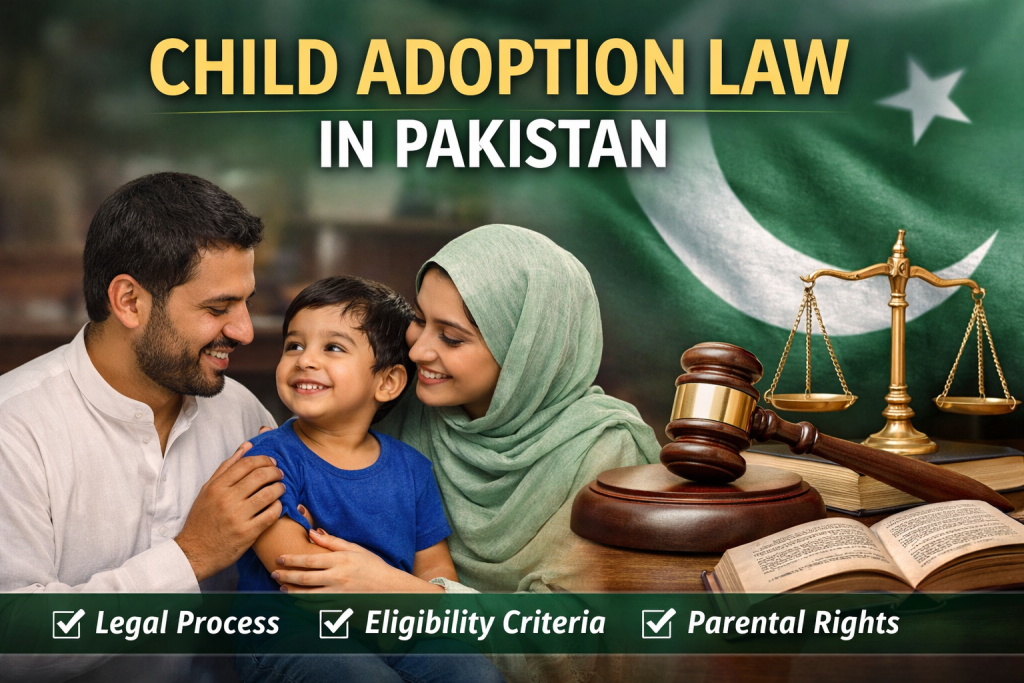
Child Adoption Law in Pakistan can feel overwhelming for prospective parents, but understanding the legal framework is the first step toward giving a child a safe and loving home. Many families struggle to navigate the complex guardianship system, eligibility requirements, and court procedures — yet with the right guidance, the adoption process can be smooth, lawful, and life-changing for both the child and the parents. In this guide, we break down everything you need to know about child adoption in Pakistan, from legal steps and parental rights to practical tips for success.
Table of Contents
This article explains the legal landscape of Child Adoption Law in Pakistan, how it works in practice, the rights and responsibilities it creates, and the step‑by‑step process for prospective adoptive parents.
2. What Does “Adoption” Mean in Pakistan?
In common law jurisdictions, adoption creates a permanent legal parent‑child relationship with inheritance and lineage rights. In Pakistan, there is no specific “adoption law”; instead, adoption is treated as guardianship under the Guardians and Wards Act, 1890. (sacgb.gov.pk)
This means:
- A court may appoint a legal guardian for a child under welfare considerations.
- The child does not automatically become the child of the guardian in terms of inheritance or lineage.
- Biological parents’ legal relationship generally remains intact, unless otherwise terminated through court process. (sacgb.gov.pk)
3. Governing Legal Framework
a. Guardians and Wards Act, 1890 (Pakistan Code)
The Guardians and Wards Act is the primary statutory law that courts use when adjudicating adoption‑related cases. It allows courts to appoint a guardian for a minor when it is in the best interest and welfare of the child. (pakistancode.gov.pk)
👉 Official Text: Guardians and Wards Act, 1890 — government statute database. (pakistancode.gov.pk)
b. Child Protection & Welfare Bureau
In provinces like Punjab, the Child Protection & Welfare Bureau administers custody or temporary custody processes for children, particularly unclaimed or abandoned children. (cpwb.punjab.gov.pk)
👉 Official Government Link: Punjab Child Protection & Welfare Bureau. (cpwb.punjab.gov.pk)
c. Family Courts
Family or civil courts are the judicial bodies where applications for guardianship orders (the functional equivalent of adoption) are filed.
d. UN Convention on the Rights of the Child (UNCRC)
Pakistan has ratified the UNCRC, which emphasizes children’s rights, welfare, and protection from abuse — serving as interpretive guidance where domestic law is silent. (docs.un.org)
4. Adoption vs. Guardianship — Key Legal Distinctions
| Adoption (Western Law) | Guardianship (Pakistan) |
|---|---|
| Creates permanent parent‑child legal bond | Court appoints guardian based on welfare |
| Child acquires legal identity of adoptive parents | Child retains original identity |
| Inheritance rights change automatically | Inheritance generally requires a will |
| Specific statute governs procedure | Guardianship Act & judicial discretion |
| Pakistan uses guardianship processes instead of full statutory adoption. (sacgb.gov.pk) |
5. Eligibility Criteria for Prospective Adoptive Parents
While not codified nationally, courts and child welfare bodies generally consider:
✔ Age and maturity
✔ Stable marital relationship
✔ Financial capability
✔ Clean background check
✔ Ability to provide emotional and family environment
For non‑Muslims and non‑citizens, courts assess the welfare of the child and may impose conditions, especially if intending to take the child abroad. (sacgb.gov.pk)
6. Step‑by‑Step Legal Procedure
Step 1 — Legal Consultation & Preparation
Engage a family law specialist to prepare your profile, evidence of suitability, and required documents.
Step 2 — File Guardianship Application in Court
Under the Guardians and Wards Act, file an application in the competent family court alleging that guardianship of the child is in the child’s welfare. (pakistancode.gov.pk)
Step 3 — Court Evaluation
Court may direct a social investigation, including home visits and background checks.
Step 4 — Hearing & Guardian Order
If satisfied with the welfare case, the court issues a guardianship order, functioning as a legal substitute for adoption.
Step 5 — NADRA & Documentation
After court order:
- Apply for necessary identity documentation from NADRA (e.g., Form B & ID where relevant).
- Note: NADRA historically has struggled to recognize guardianship as full parental identity.
Step 6 — Follow‑Up Compliance
Courts or child welfare authorities may request periodic progress reports or home visits.
7. Rights & Legal Status of the Adopted Child
Under guardianship orders:
- The child becomes legally under guardianship, with duty of care owed by guardian.
- Inheritance rights do not automatically change with guardianship — a will may be required for inheritance benefits.
- The child generally retains original family identity for civil matters unless otherwise ordered. (sacgb.gov.pk)
8. Adoption for Overseas/Non‑Citizens
Foreign nationals or overseas Pakistanis can apply for guardianship. However:
- Courts evaluate the welfare needs of the child carefully before international transfer.
- Immigration authorities of other countries may require their own adoption standards. (Travel.state.gov)
9. Common Challenges & Legal Gaps
⚠ Lack of a modern national adoption statute — courts use a colonial‑era law. (sacgb.gov.pk)
⚠ NADRA recognition issues — guardianship does not always update the child’s identity.
⚠ Inheritance ambiguities — inheritance rights do not automatically transfer.
⚠ Cultural stigmas — social misconceptions about adoption vs. guardianship.
10. Islamic Perspective (Sharia Context)
Under Islamic law, formal adoption — including changing a child’s lineage — is not permitted. Instead, kafalah (guardianship/care) preserves the child’s identity and welfare with compassionate care. Pakistani law mirrors this traditional view by using guardianship frameworks.
11. Notable Judicial Insights
Pakistani courts consistently reiterate that “welfare of the child” is the paramount criterion when granting guardianship, focusing on emotional, physical, and educational wellbeing as guiding factors in each individual case. (SAHSOL)
12. Practical Tips for Prospective Adoptive Parents
✔ Consult a family law expert early.
✔ Prepare a full personal profile and supporting evidence.
✔ Work with recognized child welfare institutions.
✔ Be transparent and patient; judicial processes may take time.
13. Government Resources
Here are authoritative government resources you can reference:
- Guardians and Wards Act, 1890 (Government Statute Database): https://pakistancode.gov.pk/english/UY2FqaJw1-apaUY2Fqa-cJc%3D-sg-jjjjjjjjjjjjj (pakistancode.gov.pk)
- Child Protection & Welfare Bureau (Punjab Government): https://cpwb.punjab.gov.pk/ (cpwb.punjab.gov.pk)
- National Commission for Child Welfare and Development (Ministry of Human Rights Pakistan): https://mohr.gov.pk/Detail/MzFjMTM5ODctODkwYS00NTUyLTk2NjQtMmNjZjEwNzJlN2Fk (mohr.gov.pk)
Conclusion
Understanding the Child Adoption Law in Pakistan is essential for anyone seeking to provide a loving and legally secure home to a child. While Pakistan does not have a dedicated adoption statute, the guardianship framework under the Guardians and Wards Act, 1890, along with provincial child welfare regulations, provides a lawful path for adoption. Prospective parents must navigate eligibility requirements, court procedures, and documentation carefully, keeping the child’s welfare as the top priority.
Although the legal system presents certain challenges — including limitations on inheritance rights and identity recognition — informed planning, consultation with legal experts, and collaboration with recognized child welfare authorities can help ensure a smooth and compliant adoption process. Ultimately, the law is designed to balance the child’s rights, the guardian’s responsibilities, and the best interest of the child, providing a structured way for children to find safe, permanent homes in Pakistan.
Contact
Pakistan Legal Services
📞 Call/WhatsApp: +92‑333‑4241182
🌐 www.pakistanlegalservices.com
💚 Comments:
Have questions about Child Adoption Law in Pakistan or want to share your experience? Leave a comment below and our legal experts will respond.
Disclaimer: ⚖️
This article is for informational purposes only. It does not constitute legal advice. For personalized assistance, consult a qualified lawyer in Pakistan.