Table of Contents
Introduction
In Pakistan, thousands of civil suits are filed annually, yet many citizens struggle to navigate the complex civil litigation process. Understanding the civil suit procedure is crucial for individuals, businesses, and overseas Pakistanis dealing with disputes in the country.
Civil suits cover disputes over property, contracts, personal rights, and inheritance. The Code of Civil Procedure, 1908 (CPC 1908) governs these cases, ensuring structured procedures from filing to judgment. This guide provides a step-by-step overview of civil litigation in Pakistan, highlighting legal requirements, court precedents, and alternative dispute resolution (ADR) options.
Key Takeaways:
-
Comprehensive civil litigation process in Pakistan
-
Steps to file and pursue a civil suit
-
Key legal principles and relevant statutory laws
-
Importance of understanding civil procedure
-
Role of court precedents and ADR
Understanding Civil Suit Procedure in Pakistan
Definition and Scope
Civil suits in Pakistan address disputes between individuals, organizations, or the government. They focus on compensation or enforcement of rights rather than punishment. Common civil disputes involve property, contracts, personal rights, and inheritance.
Civil vs. Criminal Cases
-
Civil cases: Resolve disputes, seek relief or compensation.
-
Criminal cases: Aim to punish lawbreakers, initiated by the state.
Legal Framework Governing Civil Suits
Code of Civil Procedure, 1908 (CPC 1908)
The CPC 1908 is the primary law regulating civil suits. It defines:
-
Court hierarchy and jurisdiction
-
Filing requirements and procedures
-
Service of summons and written statements
-
Presentation of evidence and trial process
Other Relevant Laws:
-
Contract Act, 1872
-
Specific Relief Act, 1877
-
Family Courts Act, 1964
Jurisdiction of Civil Courts
Territorial Jurisdiction
Determines the geographic area where the court can hear cases. The CPC 1908 outlines which court is competent based on the location of the defendant or cause of action.
Pecuniary Jurisdiction
Courts are empowered based on the value of the claim. Suit valuation affects the choice of court and applicable court fees.
Subject-Matter Jurisdiction
Some disputes require specialized courts, e.g., family courts or banking tribunals. Civil courts cannot hear revenue or constitutional matters.
Pre-Filing Requirements
Legal Notice
Serving a legal notice to the defendant is often a mandatory first step, providing them an opportunity to resolve the dispute before filing a suit.
Notice Requirements Example Table:
| Type of Suit | Notice Period | Reference |
|---|---|---|
| Civil Damages | 30 days | Section 80, CPC |
| Contractual Disputes | 15 days | Contract Act 1872 |
| Property Disputes | 60 days | Specific Relief Act 1877 |
Limitation Period
Filing a civil suit after the limitation period may bar the case. Exceptions exist for minors, incapacitated persons, or extraordinary circumstances.
Evidence Gathering
Collect documents, contracts, correspondence, and witness statements. Proper evidence is essential to substantiate claims.
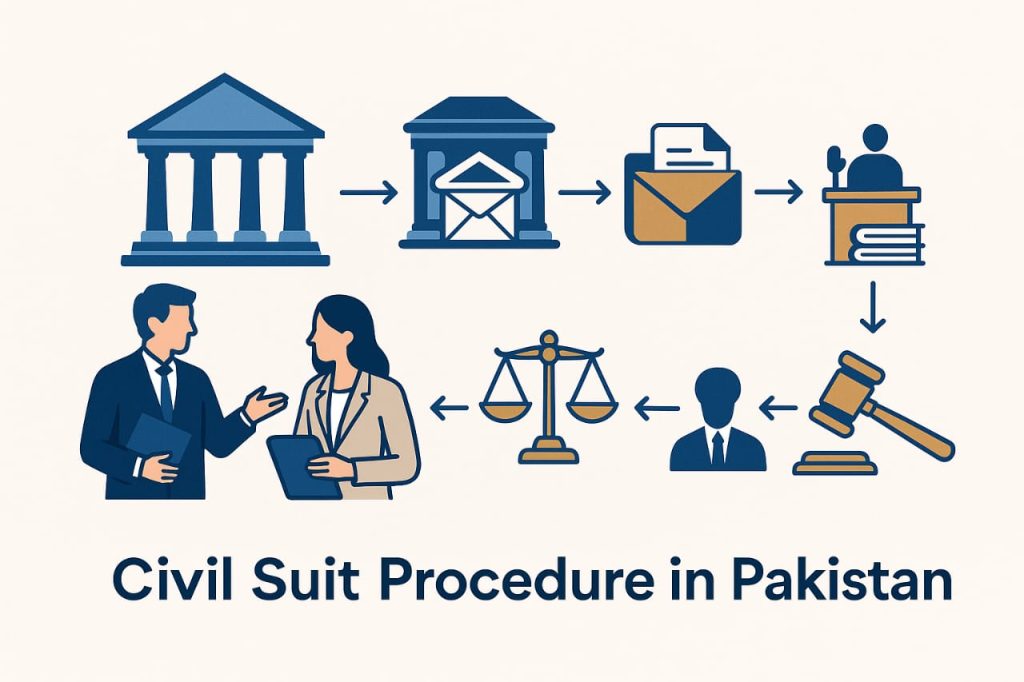
Step-by-Step Civil Suit Procedure
-
Drafting the Plaint
-
Include plaintiff/defendant details, cause of action, relief sought, and suit value.
-
-
Filing and Court Fees
-
File in the competent court; e-filing is available in many jurisdictions. Fee concessions may apply in certain cases.
-
-
Service of Summons
-
Methods: personal service, registered post, or publication if other methods fail.
-
-
Written Statement and Replication
-
Defendant files a written statement within 30 days. Non-filing may result in ex parte judgment.
-
-
Trial Process
-
Framing of issues, presentation of evidence, cross-examination, interim orders, and appointment of commissioners.
-
-
Final Arguments and Judgment
-
Court issues a decree with findings, reasons, and relief granted. Certified copies are obtained for execution.
-
-
Execution of Decrees
-
File execution applications, attach properties if needed, handle objections, and conduct auctions according to CPC 1908 provisions.
-
-
Alternative Dispute Resolution (ADR)
-
Mediation, arbitration, or court-facilitated compromise are encouraged to save time and costs.
-
-
Appeals and Revision
-
First appeal, second appeal to High Court, review, and revision applications are possible under supervisory jurisdiction.
-
-
Enforcement of Foreign Judgments
-
Certified copies of foreign decrees can be filed in Pakistan under CPC 1908 for enforcement, respecting reciprocity agreements.
-
Key Considerations for Civil Litigation in Pakistan
-
Jurisdiction and court competence
-
Limitation periods and notice requirements
-
Proper drafting of plaints and notices
-
Gathering credible evidence
-
Utilizing ADR options when possible
-
Understanding execution procedures
FAQs
Q1: What is the difference between a civil and a criminal case in Pakistan?
A: Civil cases seek compensation or enforcement of rights, whereas criminal cases aim to punish violations of law.
Q2: Do I always need to send a legal notice before filing a civil suit?
A: While not mandatory for all suits, sending a legal notice is required for certain disputes, such as government-related claims or contract breaches.
Q3: Can I file a civil suit electronically?
A: Many courts in Pakistan support e-filing to reduce paperwork and expedite proceedings.
Q4: How long does a civil case take in Pakistan?
A: Duration varies based on case complexity, court backlog, and evidence availability. Using ADR methods may shorten timelines.
Q5: Can foreign judgments be enforced in Pakistan?
A: Yes, if filed in a district court and meeting reciprocity and legal requirements.
Conclusion
Understanding the civil suit procedure in Pakistan is vital for individuals and businesses seeking to protect their rights. From pre-filing requirements to appeals and execution of decrees, following CPC 1908 ensures a structured, legally compliant approach.
By preparing well, gathering evidence, and considering ADR options, parties can resolve disputes efficiently while minimizing legal risks.
Contact
Pakistan Legal Services
📞 Call/WhatsApp: +92-333-4241182
🌐 www.pakistanlegalservices.com
Disclaimer:
This article is for informational purposes only. It does not constitute legal advice. Consult a qualified lawyer in Pakistan for personalized assistance.
Author Note:
Zaman Khan Vardag – Advocate Supreme Court of Pakistan, Law Firm: Pakistan Legal Services. Specializing in civil, criminal, property, and legal documentation services for Overseas Pakistanis and foreign nationals in Pakistan.